AN INTIMATE UNDERSTANDING OF LEATHER
While leather floors are hardly new (they were in use as far back as the reign of King Henry VIII), they have recently enjoyed a renaissance. From boutique hotels to fashion showrooms, master bedrooms to home cinemas, and studies to snugs, they are proving an ever more popular choice. This increased demand has of course persuaded more manufacturers to enter the market; inevitably some are less fastidious than others. An intimate understanding of leather is therefore required to make an informed choice.
Splits leather
Splits leather is a piece of leather from which the valuable outer layer, the epidermis or skin, has been removed (split) to be sold for top dollar either to upholsterers or other leather product manufacturers. The leftover flesh would normally be treated as a waste product and disposed of, but some of the more unscrupulous manufacturers spray a false skin onto its surface to produce what is called splits leather. If you buy a splits leather floor, you will actually be walking on plastic, not leather. Faux-leather floors, vinyl, linoleum and the like offer a visually similar option at a far cheaper price
Corrected leather
Corrected leather is produced when second-rate hides are corrected by sanding the skin down to remove unsightly marks. Given that most floor leather is about 3 or 4mm thick, of which only about 1mm is skin (the resilient bit), the balance being flesh, what you are actually doing is reducing the skin thickness to 0.5mm and thus compromising the resilience of the leather.
The other factor to bear in mind is that by correcting the leather, you remove its signature: the grain. It is this natural grain pattern that signals the difference between real and fake leather. Pigmented sprays (urethane paint) are also generally used on corrected leather, in part to colour the surface but also to fill other, deeper imperfections that the sanding has not been able to remove. As with splits leather, pigmented finishes tend to look and feel like plastic, which rather defeats the point of going to the expense of having a leather floor installed in the first place.
English full-grain, the ultimate floor leather
Full-grain leather is pure untouched, unadulterated leather. Nonetheless, it still comes in different grades. For instance, cattle reared in hot barren pastures enclosed by barbed wire, heavy with insects, will yield scratched, badly blemished and poorly conditioned hides. On the other hand, cattle reared on a south-western English dairy or beef farm with an abundance of luscious green grass, which are well watered, are not pestered by insects and benefit from proper husbandry, will produce an entirely different quality of hide.
Indeed, it is internationally recognised within the leather trade that the finest full-grain leather hides in the world are to be found in England; the very best are known as ‘Number 1s’. It is these English Number 1 hides that are used in the production of our leather floors – with the following additional criteria.
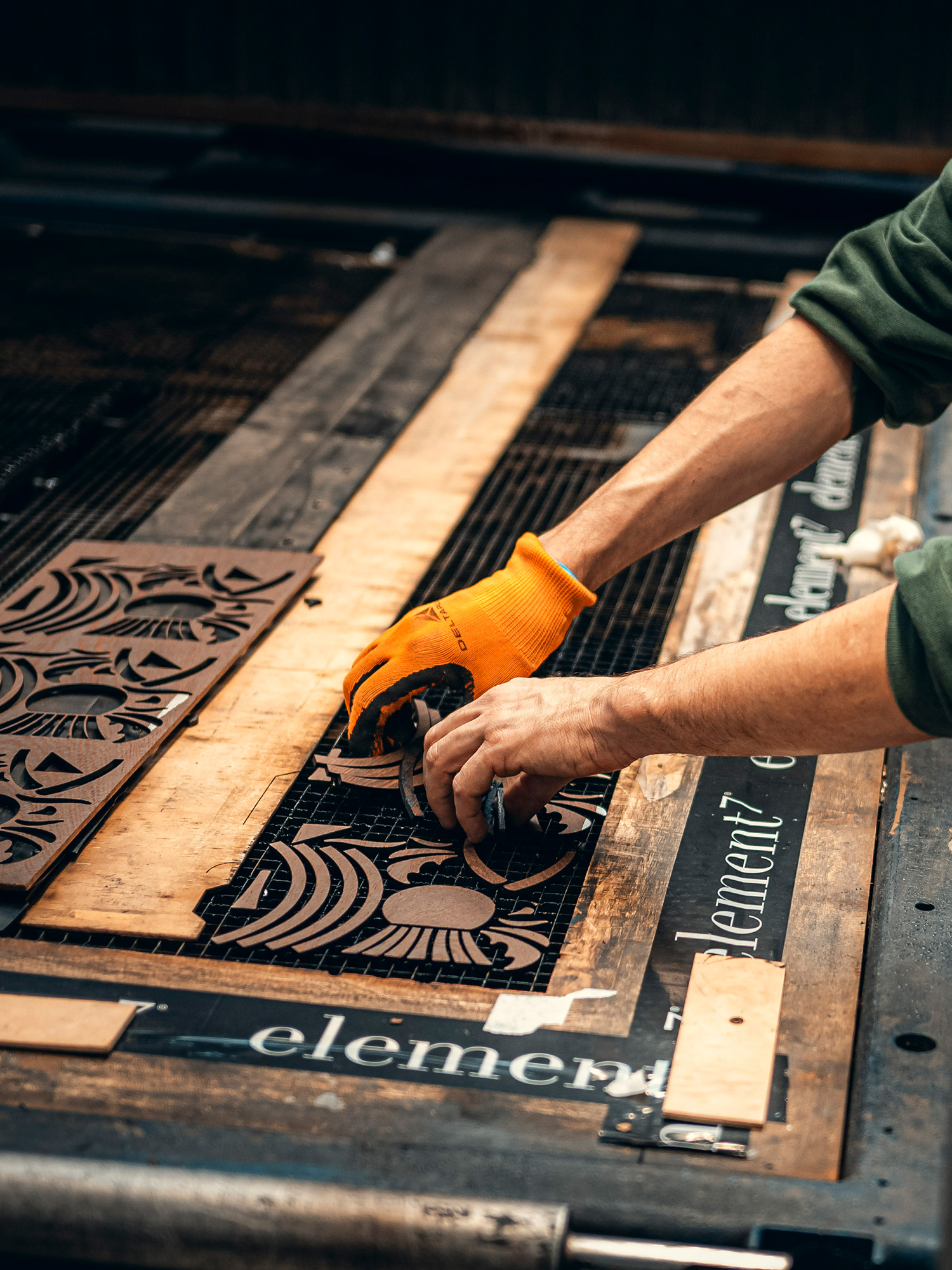
Since leather fibre strength is so vital to a floor, at Element7 we insist on tougher-fibred oxhides (male) rather than the slightly weaker cowhides (female). Moreover, we will only use the middle-back-butt sections, which is where the leather is at its strongest. Pedantic as it may sound, we also check that the hide wholesalers who supply our tannery are not sourcing from farms that use steroids in cattle feed. There are two reasons for this: first, because steroids stress the cattle and make the veins within the hides too prominent; and second, because the speed at which the cattle grow as a result of the steroids has a variety of other side effects, chief among which for our purposes is that they produce weaker hides.
Slowly Does It – the correct way to tan a leather floor
Having selected our hides, we then have them pit vegetable tanned. Pit vegetable tanning is a slow traditional tanning process that produces a far superior quality of leather, the process uses natural tree bark extract. Thanks to the length of time taken, it is also far better for the resilience of the leather.
Today, most leather floors and almost all other leather products are chrome tanned. Though far quicker than pit vegetable tanning – 24 hours as opposed to eight weeks, hence its appeal – chrome tanning is a highly toxic process. The chromium chemicals used actually damage and weaken the leather fibre. This may not be a significant issue for a handbag or a wallet, but it is a major consideration for a leather floor since strength is such a key attribute.
Getting Beneath The Surface – the right way to dye a leather floor
The final part of the process is to aniline dye the hides right through; we do not use instant two-minute spray-on pigmented (painted) surface finishes. Pigmented surface finishes look and feel like plastic, do not allow the leather to breathe, when scratched cannot be repaired and, being primarily made up of urethanes, defeat the whole purpose of a leather floor – in fact, they completely conceal the leather so that what you see and walk on no longer actually is leather!
Aniline dyeing the hides is once again the older, more traditional approach and takes a long time – days, not minutes, for the dyes to penetrate the hides completely.
But this is the only satisfactory method to adopt if you want to be able both to appreciate the natural beauty of the leather and to enjoy watching it develop its own saddle-worn patina as it matures. The fact that the leather is dyed right through also allows for scratches to blend back in properly when waxed.
The Crucial Foundation – an engineered backing board
One of the greatest changes of the last 50 years is the introduction of modern heating and cooling systems, radiant under-floor heating, air conditioning, etc. The constant changes in temperature and humidity created by these pose a huge challenge. In such conditions, a leather floor, like its wood counterpart, would naturally want to contract and expand or the leather itself curl up at the edges. Not so an Element7 floor, however.
Our finished hides are fully bonded to completely stable engineered-wood backing boards. They incorporate the same proven wood engineering technology as our wide-plank floors. The stability provided by this board allows our leather floors to deal with any modern heating or cooling system, even radiant under-floor heating, which in effect turns the floor surface into a giant radiator.
In addition, the fact that the leather is glued and pressed onto the board in a controlled factory environment means that the leather will never bubble or curl up at the edges.
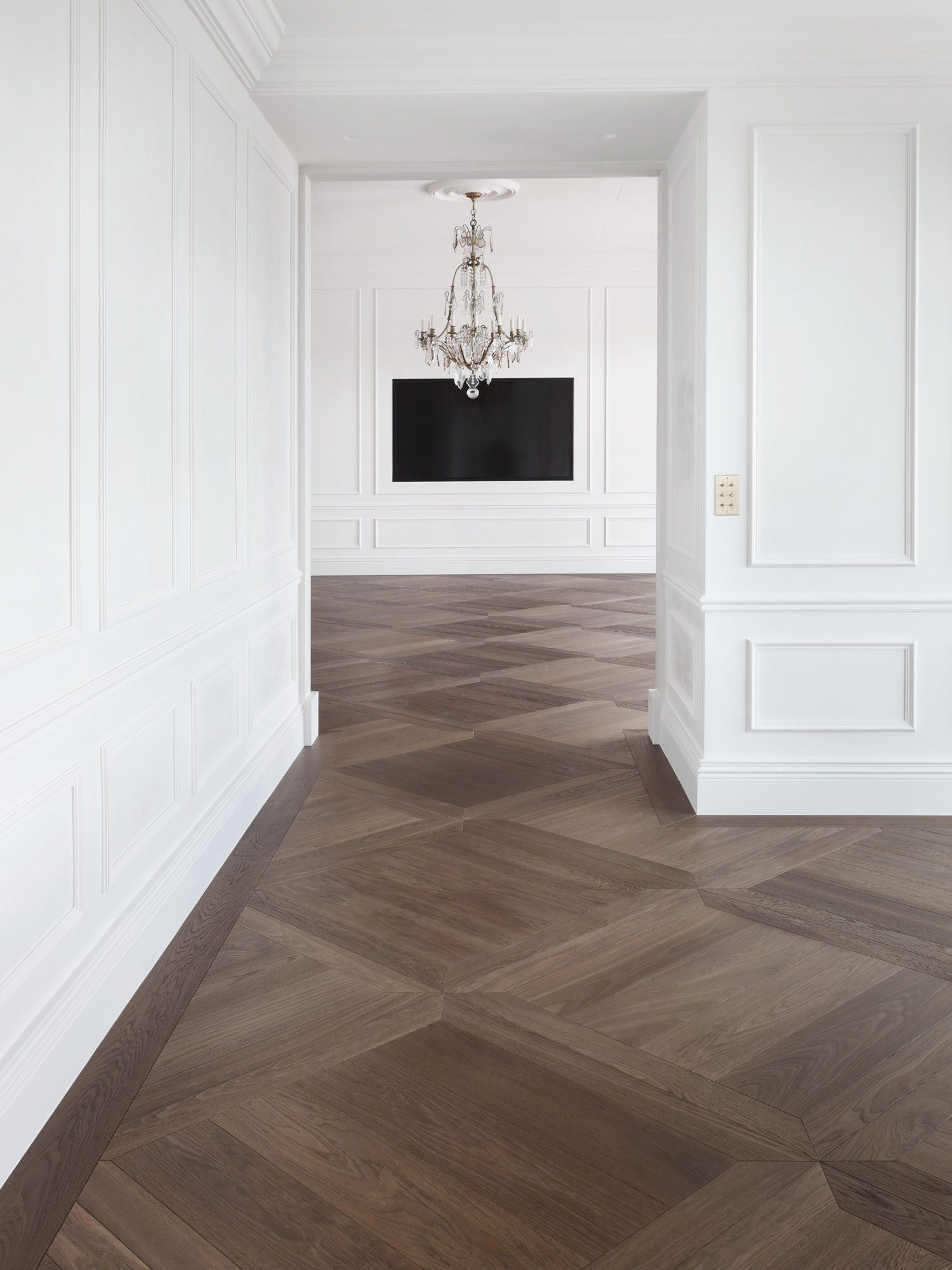
The technical supremacy of our backing boards allows for impressive tile sizes of 1150 x 1150mm or 1150 x 575mm, which further accentuate the unquestionable luxury and majesty of a leather floor.